





10.06.2026
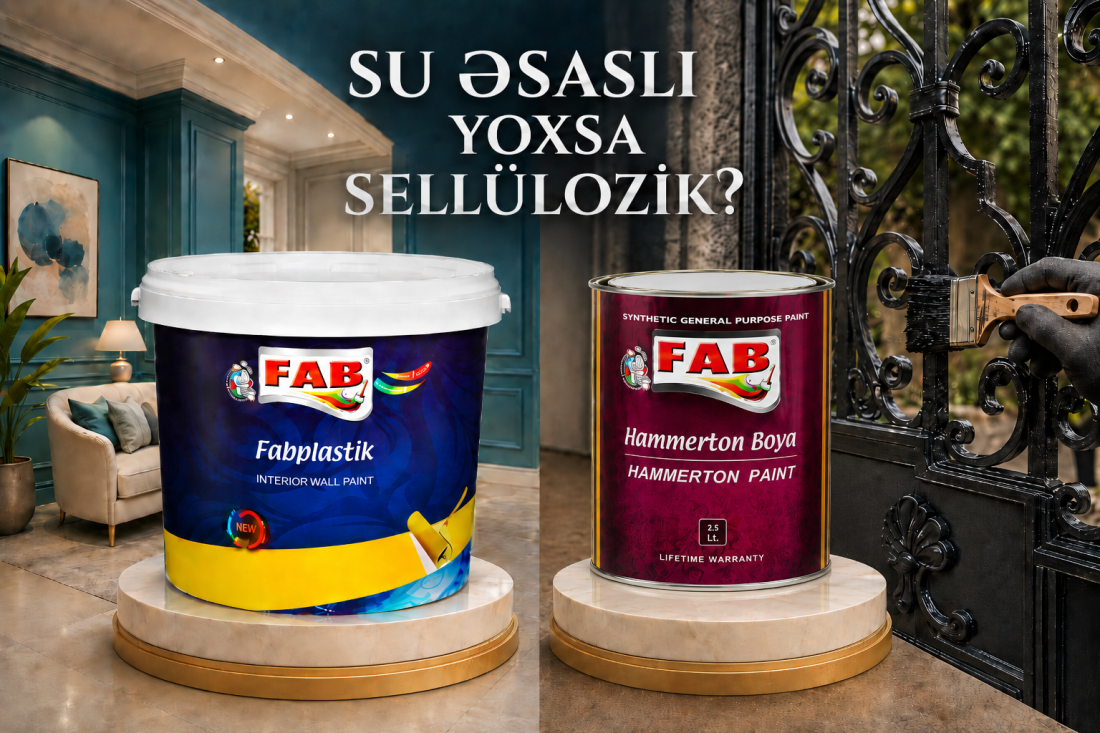
There are significant differences between water-based paints and cellulose-based paints in terms of composition, area of use, and application characteristics.
Water-Based Paint
In water-based paints, the main thinner is water. They have a low odor and are considered more environmentally friendly.
Advantages
Low odor
Dries quickly
Safer for human health
Allows the wall to breathe
Does not yellow
Easy to clean (brushes and tools can be washed with water)
Very suitable for indoor use
Areas of Use
Interior walls
Ceilings
Concrete and plastered surfaces
Offices and living spaces
Some facade paints
Disadvantages
May require a special primer on metal and wooden surfaces
Chemical and mechanical resistance may be lower compared to cellulose-based paint
Fully water-resistant options are special products
Cellulose-Based Paint
Cellulose-based paints are solvent (thinner) based and are mostly used in industrial and automotive paints.
Advantages
Dries very quickly
Creates a hard and durable surface
Can provide a high-gloss finish
Gives good results on metal and wooden surfaces
Suitable for buffing and polishing
Areas of Use
Automotive paint
Furniture industry
Metal constructions
Wooden doors and MDF surfaces
Industrial products
Disadvantages
Has a strong and heavy odor
Flammable
Requires thinner
A mask and ventilation are required during application
May yellow over time
Less environmentally friendly
Which one should be chosen and when?
For interior walls and ceilings at home → water-based paint is more suitable
For metal doors, automobiles, furniture, and MDF → cellulose-based paint is more effective
If you want odorless and easy application → water-based paint
If you want a hard, industrial-type, and high-gloss surface → cellulose-based paint
Digər xəbər yazıları
18.03.2026
26.01.2026

26.01.2026